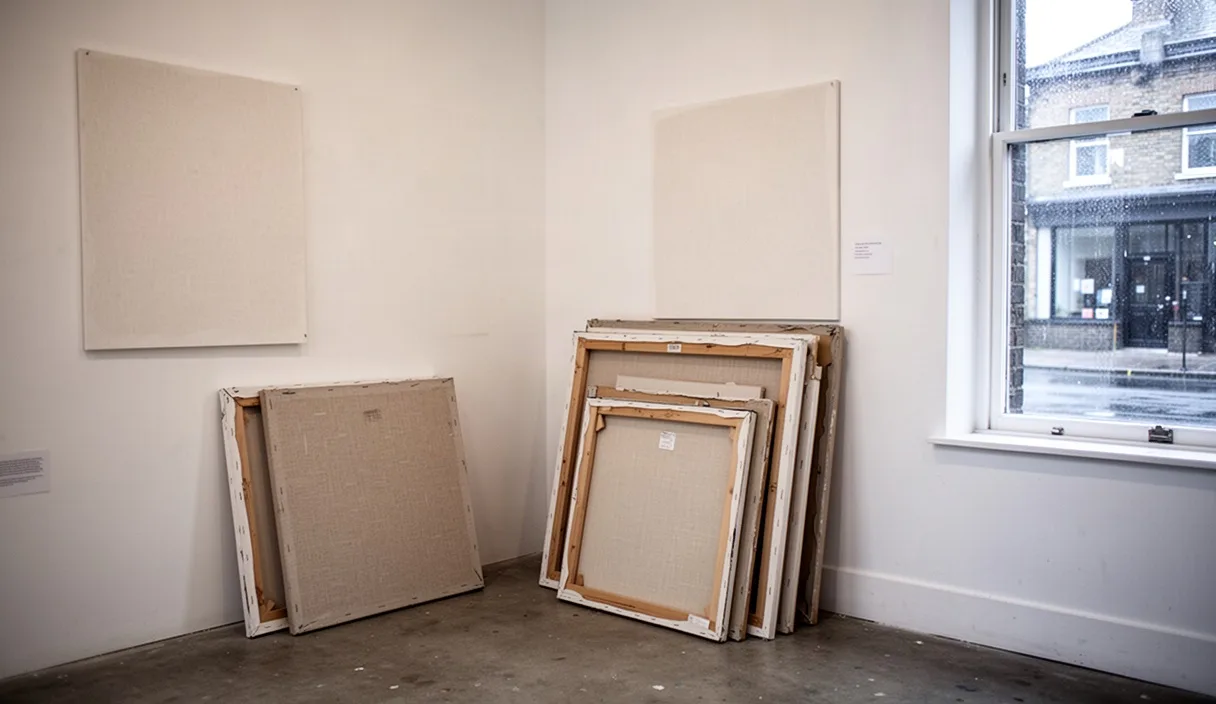
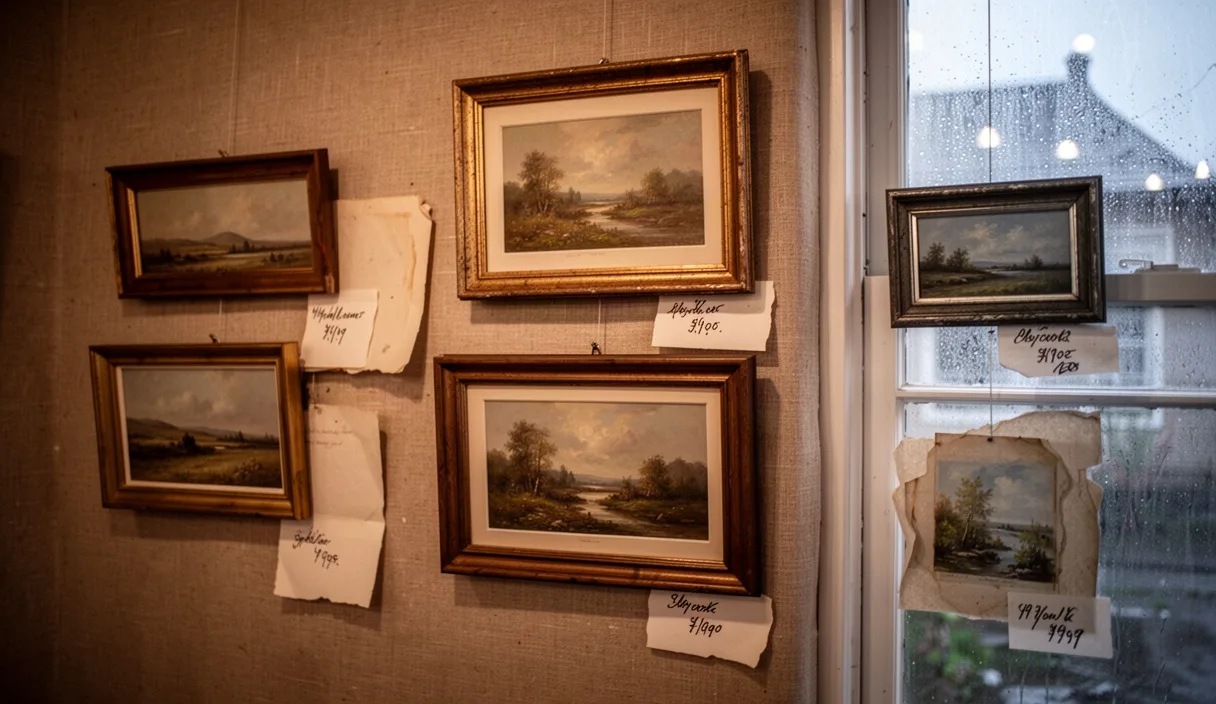
It's a wet Thursday evening on Gloucester Road, rain needling the windows of the gallery, and you've just watched someone study your canvas for a full two minutes before they ask the question you've been bracing for: "Did you use AI for this?" The radiator clanks, someone's wine glass clinks against a tray, and you realise you don't actually have a rehearsed answer. You mumble something about sketches and photo references, and the collector nods but doesn't buy. Not because the work is bad. Because the exchange felt wobbly. This is happening at openings from Stokes Croft to the Harbourside now, and it isn't going away. Collectors aren't trying to catch you out, most of the time. They're trying to understand what they're paying for, and your job is to make that easy for them without flinching, apologising, or padding your price with guilt money. This piece is about getting your footing on that exact conversation, and then pricing the work so the number on the price list has nothing to do with your nerves.
Why this question keeps coming up at private views
Three years ago nobody asked this at a private view. Now it comes up most months, especially if your work has clean edges, photorealistic detail, or a palette that looks a bit too considered. Collectors read the same news stories everyone else does, about AI image generators flooding stock libraries and social feeds, and they've started bringing that caution into the room with them, wine glass in hand.
It also comes up because the local scene has had a couple of visible incidents. A printmaker at the Christmas market on Corn Street got called out publicly last December for selling giclée prints of AI-generated landscapes as "original studies." Word travels fast in a gallery district this size, and now everyone's a little more alert, including the honest majority who never touched a generator in their life.
The practical result: the question isn't really new scrutiny of you personally. It's background noise from the wider art market that happens to land on your easel because you're the one standing next to it. Expect it at every opening from here on, the way you'd expect someone to ask about framing or shipping.
What collectors are actually trying to find out
Strip away the awkwardness and most collectors are asking one of three things, rarely all at once.
- Provenance of the hand: did a human make the decisions, brushstroke by brushstroke, or did software generate the composition and you just finished it?
- Resale value: will this hold up, or hold value, if AI involvement comes to light later and changes the market's appetite for it?
- Story for their own walls: they want something to tell dinner guests. "The artist spent six weeks on the underpainting alone" lands better than silence.
Older collectors, the ones who've been buying from the same three Bristol galleries since the nineties, tend to ask about hand and process. Younger buyers, especially ones who found you through Instagram, ask more bluntly: "Is this AI?" They've seen enough fakes scrolling past at 11pm to want a straight yes or no before they open their wallet.
Either way, vague answers read as evasive even when you're being perfectly honest. "Oh, a bit of everything" is the worst possible reply. Specificity is what reassures people, not defensiveness.
Three honest ways to describe your process
You don't need a single universal script. You need three honest descriptions depending on how you actually work, and the discipline to pick the one that's true.
1. Fully traditional process. If you paint from life, from your own photographs, or from memory with no digital generation step at all, say exactly that: "Everything here starts on paper, graphite first, then I work it up in oil over two to three weeks." Collectors relax immediately when you give a timeline, because timelines are hard to fake convincingly on the spot.
2. Digital tools, no generative AI. Plenty of painters use Photoshop to test a palette, or a tablet to rough out composition, or photo references pulled from their own camera roll. That's not generative AI, and you should say so plainly: "I compose digitally first using my own photographs, then transfer and paint by hand. No AI generation anywhere in the chain." The phrase "my own photographs" matters, it closes the provenance question before they ask it.
3. Generative AI as a documented part of the process. If you do use Midjourney or similar tools, for mood boards, early composition studies, or texture references, say so and be specific about where it sits in the workflow: "I generate rough compositional studies digitally, then the final piece is hand-painted over four weeks, nothing from the AI stage survives into the final surface." Some collectors will walk away. Others, especially younger buyers at the newer Easton galleries, find this more interesting than off-putting, as long as you're not hiding it.
Pricing based on hours and materials, not anxiety
Here's where most artists go wrong after a rough AI conversation: they either slash the price out of guilt, or inflate it defensively to prove the work is "real." Neither has anything to do with what the piece actually cost you to make.
Build your price from three components, every time, regardless of what anyone asked you at the last opening:
| Component | How to calculate it | Example, 60x80cm oil |
|---|---|---|
| Materials | Canvas, paint, varnish, framing, receipts kept | £85 |
| Labour | Hours logged x your hourly rate (start at £15-25/hr if early career) | 45 hours x £18 = £810 |
| Market multiplier | Based on gallery commission (often 40-50%) and your exhibition history | Sum x 1.4 for gallery cut |
Using that example, materials plus labour is £895, multiplied by 1.4 for a typical Bristol gallery commission, giving a retail price near £1,250. Write this down in a notebook or spreadsheet for every piece, before the opening, not during a conversation with a buyer standing in front of you. If someone asks about AI, your price doesn't move an inch, because it was never built on their approval in the first place.
If you genuinely do use generative AI in part of your process, you can still charge for the hours you spent, including the hours spent generating and selecting reference studies. That's real labour too. What changes is disclosure, not the arithmetic.
A script for awkward moments at the opening
Have three sentences ready, the way you'd have three sentences ready about delivery or framing costs. Rehearse them once in the mirror, ideally, so they don't come out stiff.
- If the answer is no: "No AI anywhere in this one, it's all hand-painted from my own reference photos, took about six weeks."
- If AI played a documented role: "I used AI for early composition sketches only, the painted surface is entirely hand-worked over four weeks, happy to show you my process photos on my phone if you're curious."
- If you're not sure why they're asking: "Is that something that matters to you for this piece, or are you asking generally? Happy to walk you through exactly how I work."
That third option does real work. It hands the conversation back to the collector without sounding defensive, and most of the time they'll clarify what they actually care about, usually resale value or just curiosity, and you can answer the real question instead of guessing at it.
When to say no comment, politely
There's a difference between a genuine collector asking in good faith and someone fishing for gossip to repeat at the pub later, and you're allowed to protect your process from the second kind without being rude.
A fair line: "I keep the specifics of my process private, the way most painters do, but I'm happy to confirm there's no generative AI in the final work." That's a true, boundaried answer that doesn't require you to narrate every stage of your studio practice to a stranger holding a plastic cup of warm Prosecco.
If a journalist or a gallery's PR person asks for a formal statement about your use of AI, that's a different situation, and it's worth having one paragraph written and agreed with your gallery in advance rather than improvising. If you're worried about contract language around AI disclosure in a gallery representation agreement, that's a question for an arts lawyer or a solicitor who handles IP, not something to settle informally over drinks.
Common mistakes
Artists tend to stumble in the same handful of ways once this topic comes up.
- Over-explaining for five minutes when a collector asked a simple yes-or-no question, which reads as guilt even when there's nothing to feel guilty about.
- Changing the story between conversations, a different answer at the opening than the one written on the gallery's website, which erodes trust fast once someone compares notes.
- Dropping prices after an awkward exchange, which trains buyers to expect a discount every time they raise the subject.
- Refusing to discuss process at all, which, fairly or not, now reads as evasive in a way it didn't three years ago.
Next steps for your own practice
Before your next opening, write down, in one paragraph, exactly how you make the work you're showing, from first mark to final varnish. Keep it in your phone's notes app. Read it back and ask whether a stranger would find it clear in fifteen seconds.
Recalculate at least one recent piece using the materials-plus-labour-plus-multiplier method above, even if you've been pricing by gut feeling for years. Compare the number to what you actually charged, and notice whether the gap came from confidence or from anxiety about questions like this one.
And if you're showing again soon, perhaps at the next first Thursday walk or a spring open studio, practise your three sentences out loud once, maybe on the walk down to the gallery in the rain. It sounds unnecessary until the question lands and you're glad you did it.