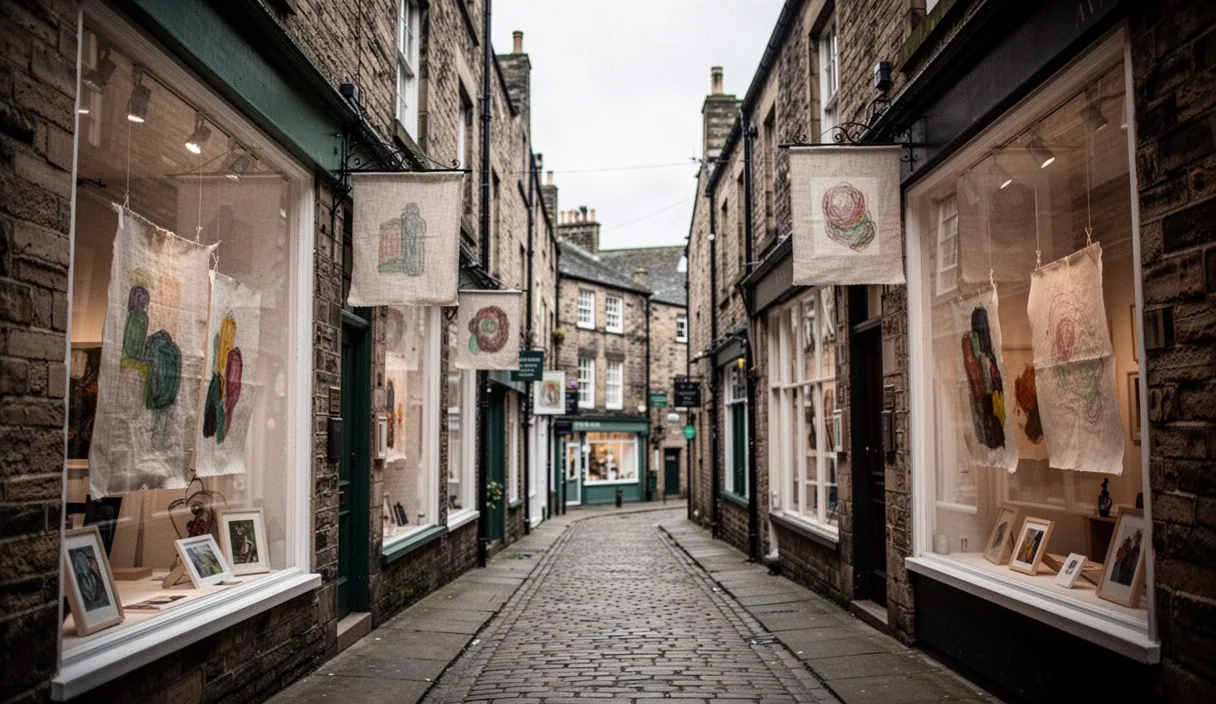
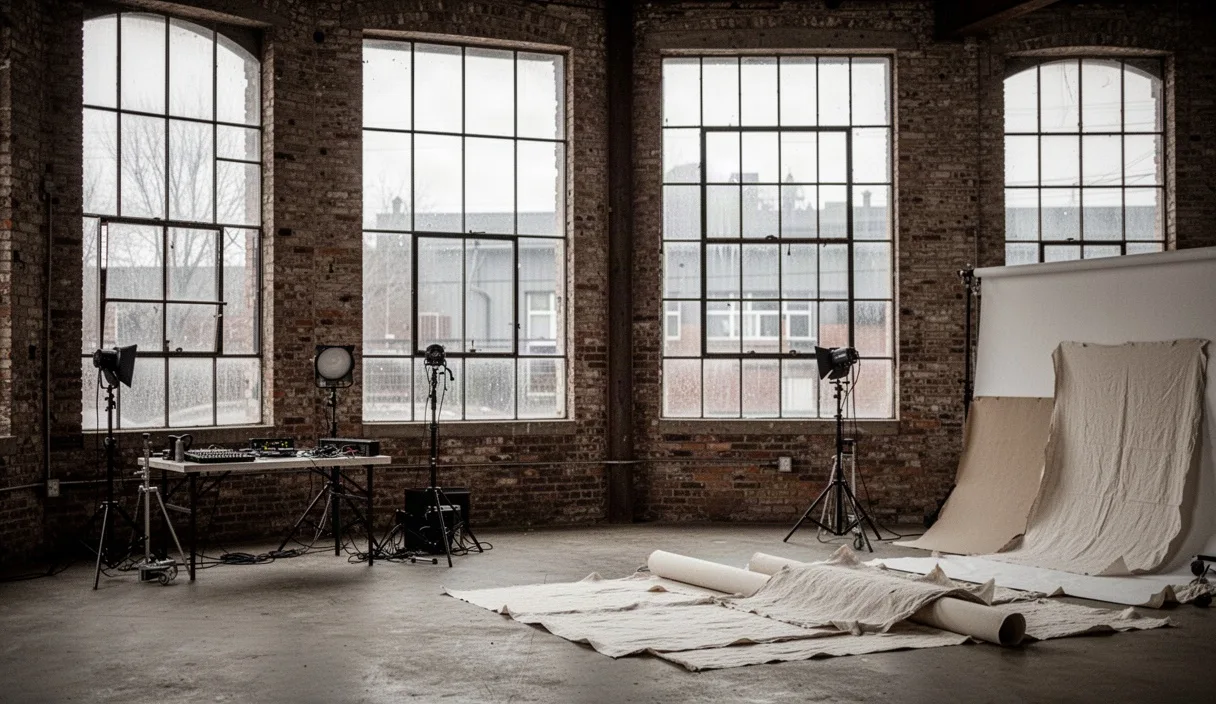
Down by the Kelham Island weir, where the Don still pushes hard enough to turn a wheel if anyone bothered to fit one, the old cutlery works and little mesters' sheds have filled up with something you wouldn't have predicted twenty years ago: servers humming next to etching benches, laptop screens glowing beside grinding wheels. Walk along Alma Street or duck into one of the yards off Burton Road on a wet Thursday afternoon and you'll hear the particular clatter of Sheffield steel work mixed with the quieter tap of keyboards. It's an odd pairing until you spend an hour in one of these buildings and realise it isn't odd at all.
This piece is a walk through three studios in the Kelham Island quarter, each wrestling in its own way with what artificial intelligence means for hand skills that Sheffield has spent two centuries perfecting. No grand verdict here, no claim that one approach is right and the others are kidding themselves. Just a look at what's actually happening on the ground, between the canal and Shalesmoor, this spring.
A short history of Kelham Island as a studio district
Kelham Island took its name from the island formed by the goit, the artificial channel dug in the twelfth century to feed a corn mill. By the Victorian era the area was dense with small workshops, the famous "little mesters" who rented a bench and a few tools and turned out knives, scissors and silverware piece by piece for the big cutlery firms. That pattern of shared space and individual craft never really left the district, even after the heavy trades declined through the 1970s and 80s.
What changed the area's fortunes was cheap rent on buildings nobody else wanted. Stag Works, the Riverside Exchange, the old Hollis Croft tenements and a scatter of yards around Cornish Place were picked up through the 1990s and 2000s by furniture makers, jewellers, printmakers and, eventually, digital studios chasing the same thing the little mesters wanted: a room with decent light and nobody looking over your shoulder.
By 2023 the Kelham Island and Neepsend Business Association counted somewhere north of 250 small enterprises in roughly a square mile, from the long-running Butcher Works studios to newer conversions along Mowbray Street. Craft and digital work have been sharing walls here for over a decade already, so the arrival of AI tools is really just the latest tenant in a building that has always had to make room for whatever comes next.
Three studios, three different approaches to AI
Ask three studio owners in Kelham Island what they think of AI and you'll get three different answers, sometimes within the same conversation. Rather than pick a winner, it's more useful to lay out how the thinking actually differs in practice.
- Riverside Metalworks (a silversmithing and engraving studio on Alma Street) uses AI image generation purely for client mood boards, never for the actual design. The owner, who trained under a mester-style apprenticeship in the 1990s, says the software helps clients explain what they want in the first meeting, but every line that ends up on metal is drawn and cut by hand afterwards.
- Stag Digital Print (based in the old Stag Works complex) has built a small in-house tool that predicts how a linocut or screen-print design will wear after repeated runs, trained on their own archive of past prints rather than scraped internet images. They see it as a quality control step, not a creative one.
- Neepsend Type Foundry refuses to use generative AI anywhere in the studio, on the basis that typeface design is slow, deliberate work and the founder would rather lose a commission than rush it. They do use ordinary software for kerning calculations, which they're careful to distinguish from generative tools.
The differences aren't really about technology literacy, since all three owners can talk fluently about model training and data provenance. They're about what each studio considers the irreplaceable part of the job, and that line sits in a different place for everyone.
What "craft meets code" looks like in practice
It's worth being concrete about what this phrase means day to day, because from the outside it can sound like marketing. At Riverside Metalworks, "craft meets code" looks like a Wacom tablet sitting next to a set of gravers that have been in the family since the 1970s, used for two entirely separate stages of one commission.
At Stag Digital Print, it looks like a spreadsheet of ink absorption rates feeding into a small prediction model, so that a design destined for a tea towel gets adjusted before it ever touches a screen, saving maybe three or four wasted print runs on a typical job. That's a real cost saving, not an abstraction: screen-printing ink and fabric aren't cheap, and a wasted run on a 40-unit order can run to £60 or £70 in materials alone.
At Neepsend Type Foundry, the overlap is almost invisible to a visitor, limited to the software used for spacing calculations that any type designer has used since the 1980s, long before anyone called it AI. The founder is quick to point out that calling a kerning algorithm "artificial intelligence" is a stretch, and that conflating the two does nobody any favours in the debate.
None of these studios describe the code side as doing the creative work. In every case the person interviewed drew a firm line between tools that speed up decisions already made by a human hand, and tools that generate the decision itself. Where a studio lands on that line seems to depend less on age or background and more on what kind of commissions they take and how much repetition is involved in the work.
Talking to artists without assuming a position
One mistake visitors and journalists both make in Kelham Island is walking in with a question already loaded: "So, are you worried about AI taking over?" Most of the makers here have been asked some version of that question enough times that they've stopped answering it properly, and you get a stock reply instead of an honest one.
A better approach, tried during the research for this piece, is to ask about a specific recent job and let the AI question come up naturally if it's relevant. At Stag Digital Print this surfaced the ink-prediction story above without any prompting about technology at all. At Neepsend Type Foundry it surfaced a story about a client who wanted a typeface "like the AI ones" without being able to say what that meant, which turned into a useful half hour about how vague the public understanding of these tools still is.
It also helps to ask what's changed in the last five years rather than asking for a prediction about the next five. Makers tend to be far more precise about the past than about speculative futures, and the answers are more useful as a result. Riverside Metalworks could point to exact dates when they adopted mood-board software (2021) and exactly which part of the process it touched, which is a far more honest account than any forecast would have been.
If you're planning to write about or photograph a Kelham Island studio, it's worth remembering these are working businesses, not exhibits. A short email beforehand explaining what you want to ask about goes a long way, and most studios will tell you plainly if a subject is off-limits that day, usually because they're mid-commission and can't stop to talk through a technical process without losing their place.
Open hours and how to visit respectfully
Kelham Island isn't a museum district with fixed visiting hours, so the practical details matter more here than in most "things to see" write-ups. Most studios that welcome drop-in visitors do so on specific days, usually linked to the wider Sheffield Design Trail or the Yellow Arch open days that run a few times a year, rather than every weekday.
| Studio | Typical open hours for visitors | Best way to check first |
|---|---|---|
| Riverside Metalworks | Tuesday and Thursday afternoons, 1pm to 4pm | Phone ahead, workshop can be closed for commission deadlines |
| Stag Digital Print | First Saturday of the month, 10am to 2pm | Check their studio noticeboard or ask at Stag Works reception |
| Neepsend Type Foundry | By appointment only | Email a week ahead, no walk-ins |
Outside of organised open days, the respectful move is to treat these buildings as you would any small workplace: don't wander into a unit uninvited, don't photograph someone's bench or tools without asking, and don't assume that because a door is propped open the studio is open to the public. Many units prop doors open simply for ventilation, especially anywhere with kilns, solder or screen-printing chemicals in use.
If you do get a tour, it's reasonable to ask about buying something small rather than just looking. Most of these studios sell directly, and a modest purchase, a print, an engraved offcut, a type specimen sheet, does more to keep the door open for the next visitor than a polite thank-you ever will.
What this small district says about the wider debate
Zoom out from Kelham Island and the national conversation about AI and creative work tends to flatten into two camps, roughly "it will ruin everything" against "it changes nothing that matters." Spend a morning in these three studios and that flattening stops making sense almost immediately.
What you see instead is a set of working professionals making granular, case-by-case decisions about where a tool earns its place in a process that, in Sheffield's case, has been refined through more than one industrial upheaval already. The cutlery trade here survived mechanisation, survived cheap imports in the 1970s, survived the near-total collapse of the steel industry in the 1980s. The people still making things by hand in Kelham Island today are, almost by definition, the ones who worked out how to keep the essential part of their craft intact through all of that.
That history doesn't guarantee anything about how AI tools will play out over the next decade, and nobody interviewed for this piece claimed it did. But it does suggest that the useful unit of analysis isn't "craft versus AI" as abstract categories, it's specific studios making specific decisions about specific commissions, which is exactly the texture this district has always rewarded a closer look to find.
Common mistakes
Visitors and writers covering this beat tend to repeat a few avoidable errors. Treating every studio in the district as having the same stance on technology is the biggest one, since even neighbouring units can disagree sharply. Assuming open studio days are year-round rather than scheduled is another, leading to wasted trips. And framing every conversation around a binary "for or against AI" question tends to get a flat, rehearsed answer rather than the more interesting specifics underneath.
Next steps for a visit
Check the Sheffield Design Trail dates for the current year before planning a trip, since several Kelham Island studios only open to the public during that window. For studios open by appointment, email at least a week ahead and say plainly what you're hoping to see or discuss. If you want to understand the AI question properly rather than get a soundbite, ask about one recent, specific commission rather than the subject in general, and be ready to buy something small as a thank you for the time.